Day 14: District 6 Museum & Robben Island


Day 14: District 6 Museum & Robben Island


Today we were able to go to the District 6 Museum.  When we got to the museum, I thought that it was going to be a breeze.  When we went inside, we were met by our guide.  As we listened to his presentation, we came to understand that he was a former resident of “District 6”.  As our guide walked us through the museum, the 
injustice that was done to the coloured residence of the district was very apparent.  As we walked through the exhibit we were able to view old street signs, reconstructed bedrooms and local establishments as well as large depictions of the destruction to the homes.  The things that stuck out to me were the large banners and messages left by visitors over time.  The destruction of “District 6” is, again, quite a similar experience to other people of color around the globe. 


After about an hour of looking around the museum, we piled back onto the bus and headed over to the V&A Waterfront and to the ferry for Robben Island. 


The first thing about this visit was the ½ hour ferry ride over to this island.  Once there, the visit added to the growing knowledge of South African history.  One addition was being able to see the Moturu Kramat, a sacred site for Muslims on Robben Island.  It was built in 1969 to commemorate Sayed Abdurahman Moturu, the Prince of Madura and one of Cape Town's first imams.  The reason that it’s on Robben island is that Moturu was exiled to the island in the mid-1740s and died there in 1754.


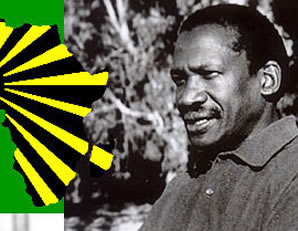
We were able to learn much more about the story of different anti-apartheid political prisoners. As we were bussed around the island, we were able to view the different places around the island.  One of these places was of very high interest was the Robert Sobukwe house. Although unknown to most in the west, he was actually one of the most respected and feared of the African nationalists. Sobukwe insisted that South Africa be returned to its indigenous inhabitants ("Africa for the Africans").


"Sobukwe joined the ANC Youth League while a student in 1948 and became a leading player, with Nelson Mandela, in their 1952 Defiance Campaign but gradually his views parted company with those of the ANC leadership. He believed strongly in that the future of Africa should rest solely in the hands of black Africans, denying the role of multi-racial groups in favor of government for the individual. In 1959, he formed a new party, the Pan Africanist Congress (PAC) and became its first President. 
At his inauguration speech, he said:

“… multi-racialism is in fact a pandering to European bigotry and arrogance. It is a method of safeguarding white interests, implying as it does, proportional representation irrespective of population figures…W
e guarantee no minority rights, because we think in terms of individuals, not groups.”


An eloquent speaker, his message of black empowerment was instrumental in creating the 1960s Black Consciousness Movement that questioned the very white stance taken by the teachings of church, state and school and led eventually to the Soweto Uprisings of 1976." (Source Source#2)  This man was indeed so powerful and such a threat to the Apartheid government, that they met and passed the General Law Amendment Act No 37 of 1963 aka T
he Sobukwe Clause, 
which allowed people already convicted of political offenses to be further detained. In laymen's terms, its was formulated, aimed and used to keep PAC leader, Robert Sobukwe in Robben Island prison. 


In addition to learning about Sobukwe, we also learned of the true conditions of how the prisoners were treated, the work that they were forced to do, and the torture that they had to endure.


Our guide who was an ex-political prisoner at Robben Island

Although Robben Island would give one [American] the impression that it could either be a place similar to the jail experience of Martin Luther King Jr, Malcolm X, or even the more infamous Duvalier jails.  Depending on the prisoner, there was a range of experiences.  On one hand, our guide explained that the inmates were allowed to further their education and earn degrees as well as educate each other within the living quarters.  However, on other hand, there are numerous examples of extreme working conditions and outright torture for not meeting . 


Nelson Mandela's Prison Cell at Robben Island

posted under | 0 Comments

Days 11-13: The Roses That Grow From Concrete

Days 11-13: Kalksteenfontein Primary School


From Tuesday to Wednesday, we had the opportunity to both observe and teach in the Kalksteenfontein Primary School.  Although it was not my grade level, I had the best experience at this school.  Upon our arrival to Cape Town, we were greeted by the principal who was willing to come out of him home at 8 o'clock at night to go through our expectations as well as brief us as to the politics and school environment that we would be stepping into. The fact that he was willing to do this before we even got to the school gave me a strong sense of respect for him as the leader of the school (as this trait is often lacking among urban leadership).


As each day began, we would meet as a group in the staff meeting room with Principal ____ and he would allow us time to ask him questions pertaining to how the day was going to go or any general questions that we had. When it came time to go to the classrooms, he personally walked us to the room as well as came and checked on us periodically.  Even at break time, he was a strong presence in the corridors.


When we first arrived in the classes, we were told to just observe and try not to allow the children to distract us or themselves from their lessons and what was going on in the classrooms.  Raafi and I were the two visiting teachers in the classroom.  This is important because as I was observing the students, I noticed that there was one boy that was beat-boxing  as he was doing his work. When it came time for our first break, I relayed this information to Raafi who was sitting a few rows behind me. As soon as I did that he called the student over and they began to make beautiful music together...that continued for the next few days.


As the boys were huddled around Raafi and enjoying the beats, the girls huddled around me and asked me a million and one questions inbetwixt playing with my hair, re-teaching me lanyard patterns, and convincing me to sing for them as to not be out done by what was going on just a few feet away. As I tried to find anyway possible to not to sing, I thought was saved by the formal break that comes after lunch. I was sadly mistaken as the learners got both Raafi and myself outside I got us to both sing for them.  After that , the beat-boxing and Afrikaans rap lyrics returned and we some how ended up all dancing.  It was at this moment that while in mid dance move one of the learners turned to me said something quickly laughed and danced off.  It didn't occur to me that she had just told me "You dance like a nigga" until after the break was over and I was sitting in the classroom contemplating it. 


I would definatly say, this is the only part of the visit to Kalksteenfontein that I regret...not hearing her in time to educate her that that is not a word she should be using...particularly in the 4th grade. 


After our first day of observations, we were allowed to teach an English (language) lesson and a lesson about America.  We decided that since the students already had "Bieber Fever" we would use the lyrics to one of his songs to promote reading comprehension. Our second lesson was all about map skills, time zones, and letter writing in english. Though after the first day of teaching I felt it was actually my first day of teaching, it wasn't bad (I still prefer high school though, sorry). 


Personally...
What I really got out of this experience is the understanding of being "coloured" in South Africa. When I was sitting in the classroom on that first day, the one thought that kept repeating itself was, "If I was born here, I would have probably gone to a school like this".  Through no fault of their own, but sheerly due to the residual politics of Apartheid, this school and community is severely under resourced, and run rampant of poverty, gang activity, drugs, violence, etc.  Though the school has superior leadership, the principal has very little outside support. It is amazing to see how so much yet so little has changed since 1994. 


posted under | 0 Comments

Day 10: A Dream Deferred

Day 10: The Amy Biehl Foundation


Today we were fortunate to be able to visit the Amy Biehl foundation in Cape Town South Africa. 


"On August 25, 1993, Amy Biehl was murdered by radical members of the militant Pan Africanist Congress while working to help South African blacks and women vote in the countries first diplomatic election. The Amy Biehl Foundation (ABF) is a non-profit organization that was founded in 1997 in Cape Town, and draws breath and inspiration from Amy and her example. The foundation reaches out to thousands of children in the Townships through After School programs. The aim is not just to keep the children off the streets and away from all the negative influences (drugs, crime, violence etc), but we are especially focused on giving them that extra necessary education in crucial areas such as HIV/AIDS prevention, reading, computers, greening and environment, music, arts, sports and more. With these programs the children are given the opportunity to show and improve their skills and creative development, which is crucial for their future. Over the years the Foundation has flourished in its mission to ‘Weave a Barrier Against Violence’ by emphasizing social, cultural and economic empowerment through its programmes. Currently, two of the young men who were convicted of Amy’s murder and granted amnesty, work for the Foundation to make these programmes a success. They are a living embodiment of the values, such as forgiveness, reconciliation and tolerance, which we strive to teach the youth of Cape Town through our work" (ABF South Africa Website // ABF US Website) 


After watching the story of Amy Biehl and listening to the opening remarks by the CEO, I was even more inspired and motivated by this organization about my own business endeavors. They are doing much of what I hope to be doing within the next ten years. Their business plan and methods are truly something to emulate as they seem to have figured out a wonderful formula to fund private enriching educational support, enrichment, and extracurricular activities for the Cape Town Township youth.


Post Participation photo-op
There are many MANY more videos of the activities of the learners, that you can view on my youtube page.

posted under | 0 Comments

Day 9: Onward to Cape Town

Day 9: Travel To Cape Town


Today we left Jo'berg and flew an hour and a half south West to Cape Town. Once we arrived we were picked up by our driver Dennis and taken to our new home for the week "An African Villa". This place was AMAZING. The staff is incredibly nice and accommodating, very knowledgeable and the facilities look just like the pictures advertise. I definitely recommend it to anyone who plans on visiting Cape Town. Not much else to mention other than sharing the pictures... 


posted under | 0 Comments

Day 8: Hope in Soweto

Day 8: Teboho Trust 


Early on Day 7 we were able to meet with Jose Bright, the founder of Teboho Trust. After the experience with the public school systems, Mr. Bright was a breath of fresh educational air. when we met for breakfast, we met with a deeply compassionate man who left a comfortable life as an attorney in the US to a philanthropist in Soweto South Africa.  If you are unfamiliar with the area, it is the main picture of South Africa get through the media as a heavily imporvished township (not that it isn't) that was a crucial area for the political uprising in the late 70's and 80's. If I were to liken it to a place closer to home, I would liken it to Newark NJ. The similarities of the heavy concentration of "blacks", issues of drugs, gangs, violence, and poverty as well as the commonality of years of poor governance and defunding would be my top reasons for this comparison. 


The issue of poor education of the township children is a real problem that seems like is not formally getting addressed by the Department of Basic Education. So, it is left up to parents and local groups to provide extra tutoring and after school programming for the youth. This is where Teboho Trust comes in. After the buy-in of the participants the day earlier, we were ready to jump right into tutoring and participating in the Saturday support classes. When we arrived, we were greeted by a large group of students who were singing as they awaited for classes to begin.


The Group then split up and participated in different classrooms assisting educators, and teaching lessons we created. One of the lessons that I was involved with was the idea of "Intergenerational Voices".  This idea was to have the "Grannies" and the learners collaborate in a project of their choosing around the topic of social justice.  The way that we began the project was to have the students brian storm what social justice is and explore different avenues in which the students felt comfortable expressing themselves.  We then had the students work on poetry specifically, "I Am" poems. We then split ourselves again and met with two representatives of the "Grannies" and spoke to them about their ideas on social justice and what they would like to get out of the project.     


When classes was over and students were preparing for lunch, members of the SAI group were allowed to hang out with the students in a less formal setting and chat with the staff, Mr. Bright, and his assistant David. We then had to say our goodbyes, as we had to prepare for the next portion of our evening.

Phuti Mahanyele 

We returned to our hotel in order to go to dinner at the residence of Rutgers alumnae Ms. Phuti Mahanyele.  We were greeted by Ms. Mahanyele and her partner on their estate and were able to have a grand tour as her guests. We spent the evening talking about South African politics, education, our own personal goals and ideas over a wonderful dinner over looking the river. Ms. Mahanyele was very kind to tell us about her upbringing in Soweto and her fathers determination to send his daughter across seas (to Rutgers New Brunswick) to further her education and to make herself into a successful business woman. 


posted under | 0 Comments

Day 7: The Day of Sobbing T.T

Day 7: The Hector Pieterson Museum 


If you do not know the story of Hector Pieterson, I would strongly suggest that you take the time to understand how important this 13 year old boy was to the struggle against oppression in South Africa. Over the duration of this trip, many people had tremendous breakthroughs when it came to the issue of race. From recieving further understanding and attaining peace with past atrocities to understanding race in a whole new way. For me, the trip to the Hector Pieterson was just that. It was the hardest day of all.  When we arrived I felt very somber.  I remember the same feeling when I went into the slave dungeon at Cape Coast Castle in Ghana. There is something about stepping on ground where you know your brothers, sisters, and ancestors fought for you that is surreal. As we walked around the grounds I remember watching people laughing and chatting as though they were waiting for the commercials to end between their favorite prime-time show. I couldn't understand what was so funny. After all, we are standing at a memorial dedicated to a 13-year old boy who got shot by police who was protesting for a better education. Again, what is so amusing? We proceeded to take a group shot at the memorial and I remember saying aloud... "It feels weird to smile right now. I don't think I should be smiling." 


As others continued to walk around I sat and waited for the rest of the group. When we went in, I could hardly look at the walls. I knew what I was getting ready to see and I knew how it was going to end and I didn't want to get to that end. I walked straight in, looked at about three displays and right when I got to the video of Steve Biko speaking about the necessity of a quality education, I broke. I ran as fast as I could to the bathroom and began to weep.


My view of the museum...the bathroom stall

I wasn't weeping out of sadness as many may have thought. I was weeping out of sheer ANGER. Anger for my people, anger over the past and anger over our present condition. I sat in the bathroom for about 45 minutes before I was collected enough to rejoin the group. 


After coming out, the group reconvened and we were able to hear first hand testimony from Hector Pieterson's older sister about that day. It was amazing watching her now as a grown woman speaking about that fateful day and hearing first had about why the students were actually fighting. I began to wonder to myself, with the present condition of the education system, what would it take for students in America to stand up.  This is a thought that has permeated my mind since the "Arab Spring". It seems as though the attitudes of young people in America seems to be so apathetic...


...that a political movement seems to be the furthest of things to come. Does this mean that I do no t think that it is possible? No, not at all but what would be a catalist for young people to be willing to sacrifice their lives for? That remains to be seen.


Movie: A Million Colours


Later that night a few of us were walking around the mall in Jo'berg and came across a movie theatre. So, to do a little exploring, we decided to watch a movie. One observation that was made was that there was absolutely NO American cinema available for viewing. There were many foreign films available from France, Germany, England, etc. But, we decided on watching a local film called A Million Colours


Overall, after the day I had at the museum, I was a little worried that the movie would stir something up within me. But, I decided I would take a leap and just go see it. After viewing the film, I will say, it was not at all what I was expecting. It was a personal story about two people set against the anti-apartheid movement. The acting was very good and as a foreigner, I think it was a pretty good portrayal of the mood of the country during the time period. However, I think that I would be interested in purchasing the film once it comes out so that I may watch it again.  Honestly, after leaving the theatre, I was less than enthusiastic about the movie there were many gaps in the plot for me and it became confusing and drawn out at times. But, I think after watching it again with a clearer mind it might actually be better than my first impression. I would definitely recommend it to watch just to get a general flavor of South African cinema (the acting was exceptional) and a window in which to view life in the townships of the 70's. I would equate it to Boys n The Hood as a depiction of life in the early 90's for young black men in urban American ghettos. The most memorable part of the movie was when one of the characters gets "Necklaced".  This part stuck out to me because I had never heard of this practice before I came to South Africa. But, to be able to actually get a visual on what it would have looked like first hand was an image I will never be able to remove from my mind.

posted under | 0 Comments

Day 6: Git You That Edge-u-kashun

Day 6: Back to Stanza Bopape Secondary School


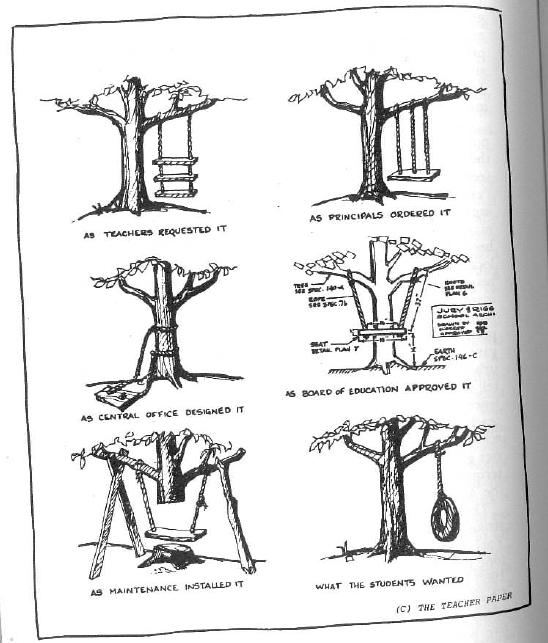
Today we went back to the schools in Mamelodi.  Though we went equipped to jump back in the classroom bond with the students and learn from the staff, we were met with the reliability of the school political system. We were able to actually do some instruction for about thirty minutes, but alas, it was a temporary joy. For those who are not teachers or may be unclear about what I may be talking about I think the following visual will due my point justice:


I am writing about this not to defame the school nor should it directly reflect on the SAI program. I bring it up to point out that with all of th controversy about education reform in America, thousands of miles away, some schools in South Africa are going through the same things and at time in even more extreme conditions.  Over crowding (30-70 students per teacher!), poor facilities, underfunding and lack of resources, bureaucracy, impotent leadership, poverty, etc.  In fact when we first came to the country, we were met with headlines like:


The Limpopo textbook blame game!


Limpopo textbook: Angie knew all along

Limpopo Textbook Crisis - Whistleblower Out in the Cold


Limpopo Textbooks Still Outstanding


This was in regards to a story about a province in South Africa, that after half of the school year, had still not received their text books. 


Yes, it sounds like schools I have visited, taught at and or heard about here at home. Although today's experience has shortened our experience here in Mamelodi, I am glad I have the opportunity to see both sides of the educational system here in South Africa.  I would be very remiss if I had come and it was a simple teaching experience. I'm glad I got the opportunity to teach, observe instruction and witness school politics in action. 


PS. As a side note before I left the classroom today. A young man who was fooling around almost the whole experience (not answering questions, not telling us him name, etc) was joking around with a classmate as we were giving things out.  When I addressed him he ignored me and continued to speak in isizulu to his neighbor. However, as he was looking at me and playing around the little bit of english he did use "nigga" in his sentence. 


In similar teacher fashion as the other day I asked him what word did he use. At that point, he became quiet. I asked him again. He thought of something else to tell me. I told him, no, that was not the word he used. I then encouraged him to repeat it, to the point of discomfort. Yes, reader, I have been called a "nigga" not once but twice on this trip.

posted under | 0 Comments
Newer Posts Older Posts Home

Followers

South Africa Initiative - 2012

"There and back again" South Africa

Raafi Bell - My Journey to South Africa


Recent Comments