Today we left Jo'berg and flew an hour and a half south West to Cape Town. Once we arrived we were picked up by our driver Dennis and taken to our new home for the week "An African Villa". This place was AMAZING. The staff is incredibly nice and accommodating, very knowledgeable and the facilities look just like the pictures advertise. I definitely recommend it to anyone who plans on visiting Cape Town. Not much else to mention other than sharing the pictures...
Early on Day 7 we were able to meet with Jose Bright, the founder of Teboho Trust. After the experience with the public school systems, Mr. Bright was a breath of fresh educational air. when we met for breakfast, we met with a deeply compassionate man who left a comfortable life as an attorney in the US to a philanthropist in Soweto South Africa. If you are unfamiliar with the area, it is the main picture of South Africa get through the media as a heavily imporvished township (not that it isn't) that was a crucial area for the political uprising in the late 70's and 80's. If I were to liken it to a place closer to home, I would liken it to Newark NJ. The similarities of the heavy concentration of "blacks", issues of drugs, gangs, violence, and poverty as well as the commonality of years of poor governance and defunding would be my top reasons for this comparison.
The issue of poor education of the township children is a real problem that seems like is not formally getting addressed by the Department of Basic Education. So, it is left up to parents and local groups to provide extra tutoring and after school programming for the youth. This is where Teboho Trust comes in. After the buy-in of the participants the day earlier, we were ready to jump right into tutoring and participating in the Saturday support classes. When we arrived, we were greeted by a large group of students who were singing as they awaited for classes to begin.
The Group then split up and participated in different classrooms assisting educators, and teaching lessons we created. One of the lessons that I was involved with was the idea of "Intergenerational Voices". This idea was to have the "Grannies" and the learners collaborate in a project of their choosing around the topic of social justice. The way that we began the project was to have the students brian storm what social justice is and explore different avenues in which the students felt comfortable expressing themselves. We then had the students work on poetry specifically, "I Am" poems. We then split ourselves again and met with two representatives of the "Grannies" and spoke to them about their ideas on social justice and what they would like to get out of the project.
When classes was over and students were preparing for lunch, members of the SAI group were allowed to hang out with the students in a less formal setting and chat with the staff, Mr. Bright, and his assistant David. We then had to say our goodbyes, as we had to prepare for the next portion of our evening.
Phuti Mahanyele
We returned to our hotel in order to go to dinner at the residence of Rutgers alumnae Ms. Phuti Mahanyele. We were greeted by Ms. Mahanyele and her partner on their estate and were able to have a grand tour as her guests. We spent the evening talking about South African politics, education, our own personal goals and ideas over a wonderful dinner over looking the river. Ms. Mahanyele was very kind to tell us about her upbringing in Soweto and her fathers determination to send his daughter across seas (to Rutgers New Brunswick) to further her education and to make herself into a successful business woman.
If you do not know the story of Hector Pieterson, I would strongly suggest that you take the time to understand how important this 13 year old boy was to the struggle against oppression in South Africa. Over the duration of this trip, many people had tremendous breakthroughs when it came to the issue of race. From recieving further understanding and attaining peace with past atrocities to understanding race in a whole new way. For me, the trip to the Hector Pieterson was just that. It was the hardest day of all. When we arrived I felt very somber. I remember the same feeling when I went into the slave dungeon at Cape Coast Castle in Ghana. There is something about stepping on ground where you know your brothers, sisters, and ancestors fought for you that is surreal. As we walked around the grounds I remember watching people laughing and chatting as though they were waiting for the commercials to end between their favorite prime-time show. I couldn't understand what was so funny. After all, we are standing at a memorial dedicated to a 13-year old boy who got shot by police who was protesting for a better education. Again, what is so amusing? We proceeded to take a group shot at the memorial and I remember saying aloud... "It feels weird to smile right now. I don't think I should be smiling."
As others continued to walk around I sat and waited for the rest of the group. When we went in, I could hardly look at the walls. I knew what I was getting ready to see and I knew how it was going to end and I didn't want to get to that end. I walked straight in, looked at about three displays and right when I got to the video of Steve Biko speaking about the necessity of a quality education, I broke. I ran as fast as I could to the bathroom and began to weep.
My view of the museum...the bathroom stall
I wasn't weeping out of sadness as many may have thought. I was weeping out of sheer ANGER. Anger for my people, anger over the past and anger over our present condition. I sat in the bathroom for about 45 minutes before I was collected enough to rejoin the group.
After coming out, the group reconvened and we were able to hear first hand testimony from Hector Pieterson's older sister about that day. It was amazing watching her now as a grown woman speaking about that fateful day and hearing first had about why the students were actually fighting. I began to wonder to myself, with the present condition of the education system, what would it take for students in America to stand up. This is a thought that has permeated my mind since the "Arab Spring". It seems as though the attitudes of young people in America seems to be so apathetic...
...that a political movement seems to be the furthest of things to come. Does this mean that I do no t think that it is possible? No, not at all but what would be a catalist for young people to be willing to sacrifice their lives for? That remains to be seen.
Movie: A Million Colours
Later that night a few of us were walking around the mall in Jo'berg and came across a movie theatre. So, to do a little exploring, we decided to watch a movie. One observation that was made was that there was absolutely NO American cinema available for viewing. There were many foreign films available from France, Germany, England, etc. But, we decided on watching a local film called A Million Colours
Overall, after the day I had at the museum, I was a little worried that the movie would stir something up within me. But, I decided I would take a leap and just go see it. After viewing the film, I will say, it was not at all what I was expecting. It was a personal story about two people set against the anti-apartheid movement. The acting was very good and as a foreigner, I think it was a pretty good portrayal of the mood of the country during the time period. However, I think that I would be interested in purchasing the film once it comes out so that I may watch it again. Honestly, after leaving the theatre, I was less than enthusiastic about the movie there were many gaps in the plot for me and it became confusing and drawn out at times. But, I think after watching it again with a clearer mind it might actually be better than my first impression. I would definitely recommend it to watch just to get a general flavor of South African cinema (the acting was exceptional) and a window in which to view life in the townships of the 70's. I would equate it to Boys n The Hood as a depiction of life in the early 90's for young black men in urban American ghettos. The most memorable part of the movie was when one of the characters gets "Necklaced". This part stuck out to me because I had never heard of this practice before I came to South Africa. But, to be able to actually get a visual on what it would have looked like first hand was an image I will never be able to remove from my mind.
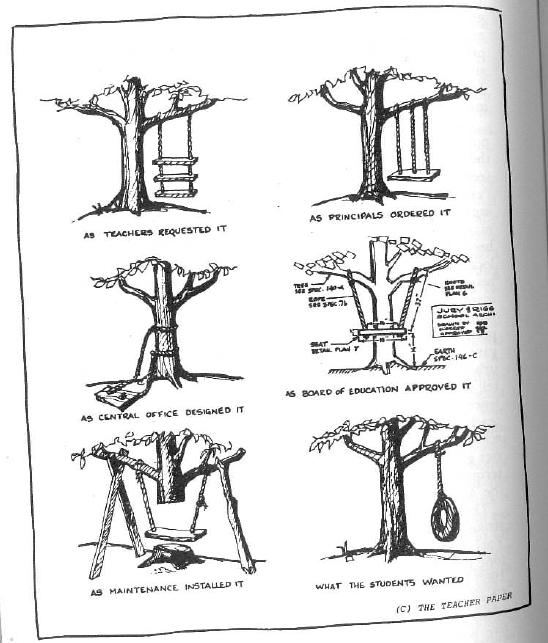
Today we went back to the schools in Mamelodi. Though we went equipped to jump back in the classroom bond with the students and learn from the staff, we were met with the reliability of the school political system. We were able to actually do some instruction for about thirty minutes, but alas, it was a temporary joy. For those who are not teachers or may be unclear about what I may be talking about I think the following visual will due my point justice:
I am writing about this not to defame the school nor should it directly reflect on the SAI program. I bring it up to point out that with all of th controversy about education reform in America, thousands of miles away, some schools in South Africa are going through the same things and at time in even more extreme conditions. Over crowding (30-70 students per teacher!), poor facilities, underfunding and lack of resources, bureaucracy, impotent leadership, poverty, etc. In fact when we first came to the country, we were met with headlines like:
The Limpopo textbook blame game!
Limpopo textbook: Angie knew all along
Limpopo Textbook Crisis - Whistleblower Out in the Cold
Limpopo Textbooks Still Outstanding
This was in regards to a story about a province in South Africa, that after half of the school year, had still not received their text books.
Yes, it sounds like schools I have visited, taught at and or heard about here at home. Although today's experience has shortened our experience here in Mamelodi, I am glad I have the opportunity to see both sides of the educational system here in South Africa. I would be very remiss if I had come and it was a simple teaching experience. I'm glad I got the opportunity to teach, observe instruction and witness school politics in action.
PS. As a side note before I left the classroom today. A young man who was fooling around almost the whole experience (not answering questions, not telling us him name, etc) was joking around with a classmate as we were giving things out. When I addressed him he ignored me and continued to speak in isizulu to his neighbor. However, as he was looking at me and playing around the little bit of english he did use "nigga" in his sentence.
In similar teacher fashion as the other day I asked him what word did he use. At that point, he became quiet. I asked him again. He thought of something else to tell me. I told him, no, that was not the word he used. I then encouraged him to repeat it, to the point of discomfort. Yes, reader, I have been called a "nigga" not once but twice on this trip.
Today we went to the Zoological gardens. It was really interesting to see all that goes into running a zoo. The staff was especially wonderful as they took their time to explain all parts of the different departments (genetics, cell and tissue storage, reproductive research, etc) to us as well as show us around the zoo and have us interact with the animals and explaining their complex relationships. (Most of todays visit will be better understood after I post the video and pictures when I get back into the states).
Personally, most of today was actually spent in self reflection. This trip to South Africa is actually my first time out of the US without a group of people in which I have previously established relationships. Though this trip is a lot about academic education, much of it also has to do with reconciling all of these new experiences with a very diverse group of people. After 5 days, my experience is now beginning to give rise to some common themes that require closer examination.
So, hence the title of the post for the day. As interesting, fun, and great that some people are, they (as well as your self) can make you want to leave them behind in a zoo for closer examination and study. But, after posing a hypothesis, conducting research, and running some tests, one comes to a conclusion on which attitudes, habits and relationships are sustainable and necessary and which are transient and must be cleaned out.
"The most important time in history is, NOW, the present. So count your blessings cause time can't define the essence...Things I say and do, may not come quite through, My words may not convey just what I'm feelin" ~Talib Kweli
Today we were able to go into the local school district and observe classes as well as teach. This experience was one of the draws of the SAI program for me, so I was very excited.
When we first arrived we were introduced to the principal and the heads of the various departments. After all of that we were able to pair up with teachers that we were to shadow for the day.
Generally, I thoroughly enjoyed the experience. I was able to follow a Geography teacher and cot each a history class with one of the other participants. The most memorable portion of the day was when my portion of the class was discussing racial classification in South African and comparing it to America. I asked the student why I would be defined as "coloured" in South Africa and they proceeded to point out the difference in my hair texture as well as skin color. I then proceeded to ask what they thought I would be defined as in the US and after a brief pause, one of the students answered "a nigga".
Yes, yes. You read that correctly. MTv has gotten children all the way across the Atlantic to believe that this term is both descriptive and endearing term for melinated peoples. I would just like to take this moment to thank YMCMB for spending thousands of dollars and coming half way across the world to be called a nigga by a child. Needless to say, I stopped my lesson and broke down the "n-word" to these children to the point that they looked at me like a crazy person when I asked them if they wanted me to call them a "nigga". After this breakout lesson, I resumed my planned lesson. The idea was that I layed out a map of the world and took different pictures from across the diaspora and had the students guess which country the people were in. Here is a sample of some of the pictures...
The point of the lesson begin that poverty and stuggle exists in America as well as other "developed" countries. The results were quite interesting. One of the students found it so hard to believe that he said that I was lying and that I should prove it. The lesson was extremely successful, so much so that the students convinced their teacher to allow us to stay and continue to teach and so they could ask us more questions. The students also found it hard to believe that my own students struggle with gangs, drugs, teen pregnancy, and poverty just like they do in Mamelodi South Africa. I can't wait to bring this information back to my students to see their reaction.
NYU Mixer
That evening when we got back to the hotel, we got an opportunity to participate in a joint program with Professor Teboho Moja from the NYU Steinhardt School of Culture, Education, and Human Development. The lecture that we participated in was with Dr. Joseph B. Diescho, Director of International Relations and Partnerships at the University of South Africa. It was AMAZING! We got to hear from a person who was actually part of the liberation of the country and someone who is knowledgeable and realistic about its rebuilding. I also found a new interest in the whole Truth and Reconciliation Commission (TRC) process that occurred. Though the process was not perfect and in some ways and views "Justice" was not realized. However, the very notion of forgiveness and reconciliation is completely foreign to African-Americans. I find the idea very African in construction and application in addressing an open political and painful occurrence. I am interested in bringing this idea back to the states and finding what others think of this idea.
"Tell me who knows, a peaceful place where I can go to clear my head I'm feelin low, losin control. My heart is sayin leave, oh what a tangle web we weave" ~TuPac
Today we worked with some volunteers at this great haven for mothers who are HIV positive and their children. HIV and AIDs are two things that after the mid 90s pretty much stopped getting talked about in the US (that may be because I was raised in the suburbs?) However, before summer break, I asked my students about what they know about HIV and AIDsand they have relayed that they just know its a life long disease that can kill you and to use condoms...which was actually a very sad response on account of how little it proves that they really don't know. It is no wonder why. In America, our top killers are Heart disease, Cancer, Chronic lower respiratory diseases, Stroke (cerebrovascular diseases), Accidents (unintentional injuries), Alzheimer's disease, Diabetes, Influenza and Pneumonia, Nephritis, nephrotic syndrome, and nephrosis, & Intentional self-harm (suicide).HIV and AIDs is not even in our top ten to join in the conversation. However in South Africa, where it effects about six million in the population and is still a big stigma, it is a force to be reckoned with.
The point of todays visit was to assist the "Netfundis" (caretakers) with the implementation of an online mentorship program for the children and provide classroom management skills. In addition to this we assisted with the after school care and tutoring of students. It was interesting to find that the students aka teenagers provide the same difficulties no matter where there are in the world (lol). The highlight of my day was tutoring a young lady with her english homework and help her review a peer review assignment that was due for the next day. Though I am a teacher, it was a quite different side to help a student one-on-one and get the direct feedback rather than 5 min, 40 min, 1 day, 1 week, etc. later.







Recent Comments